Need a crane scale that delivers pinpoint accuracy every time
ID: #96009
Business Description
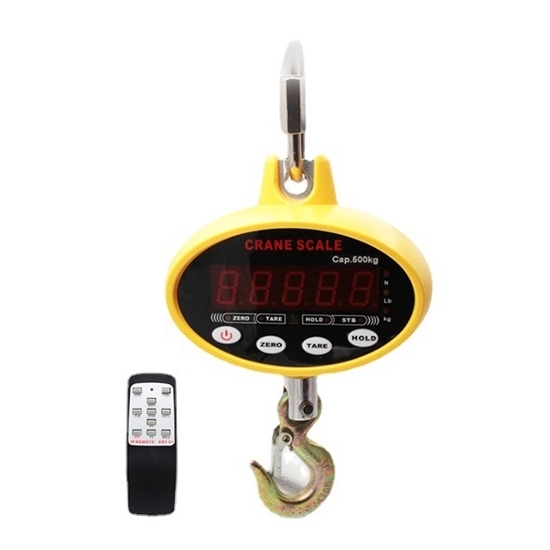
A crane scale is a specialized weighing instrument designed to measure the mass of objects while they remain in a suspended state. It functions as a hook scale installed beneath cranes or lifting equipment to weigh goods during loading, unloading, or transfer operations. The device consists of several key components including a high-strength hook, shackle, display controller, load cell, metal casings, front and back covers, and a protection board .
These scales offer multiple advantages that have made them essential across various industries. They provide multi-functionality, high precision, strong anti-cheating capabilities, and low maintenance costs. Because of these benefits, crane scales are now widely used in logistics, warehouses, factories, docks, trading markets, and online charging systems. Models with capacities exceeding 30 tons are specifically employed for material delivery in metallurgy, railway operations, and industrial and mining companies .
Modern crane scales come in several configurations to suit different operational needs. Direct display crane scales integrate the sensor and scale body with an integrated display screen for immediate reading of weighing data. These units typically include features such as automatic accumulation, tare functions, remote tare capability, value hold, overload limits, underload reminders, and low power alarms. Wireless crane scales, on the other hand, incorporate additional components including a wireless instrument, trolley, wireless transmitter and receiver, charger, antenna, and battery. When an object hangs from the scale, the sensor detects tension deformation, converts the resulting current changes into electrical signals through A/D conversion, and transmits the data wirelessly to a receiver that processes and displays the measurement .
Capacity ranges vary significantly depending on the application. Hanging crane scales accommodate loads from 1 ton to 10 tons and can rotate 360 degrees with 5-digit LED displays. Industrial models handle capacities from 5 tons to 50 tons and feature wireless control with high-temperature resistant construction using seamless steel pipe welding and heat shielding materials. For heavy-duty operations, digital wireless crane scales offer ranges from 25 tons to 200 tons, equipped with wireless handheld receivers capable of transmitting data up to 200 meters. These heavy-duty units feature rugged alloy steel casings and anti-interference wireless systems designed to withstand extreme temperatures and harsh environments .
Specialized applications require specific adaptations. Marine electronic crane scales, for instance, feature IP67 waterproof ratings and corrosion-resistant high-strength aluminum alloy construction to withstand complex marine environments. These units utilize wireless transmission technology and offer selectable ranges of 1 ton, 2.5 tons, or 5 tons .
Proper usage requires adherence to safety protocols. Operators must maintain adequate distance from suspended loads to prevent injury from accidental falling objects. Before each use, all components including screws, hooks, lifting rings, and split pins should be inspected to ensure safe operation. Overloading is strictly prohibited, and heavy objects must be lifted vertically without dragging the scale body. When adjusting the instrument handle, users should pull evenly from both sides to rotate it to a convenient angle .
Regular calibration maintains measurement accuracy. The calibration process requires warming up the digital crane scale for 15 minutes before testing. For scales under 5 tons, flat weights that stack easily are preferred for safe lifting. Larger capacity scales require a lifting platform to safely position standard weights. During eccentric load calibration, weights equal to 80% of maximum capacity are rotated 360 degrees in both clockwise and counterclockwise directions, with measurements recorded at 90-degree intervals to establish eight detecting points .
When selecting a crane scale, purchasers should consider accuracy requirements, measurement range, available functions, and versatility. Economic benefits extend beyond the initial purchase price to include operational efficiency gains such as reduced handling steps, space savings, cost reduction, and improved product quality. The availability and pricing of accessories and consumable materials should also factor into the decision, as these ongoing costs affect the total cost of ownership .
Business Hours
Monday : 09:00 - 17:00
Tuesday : 09:00 - 17:00
Wednesday : 09:00 - 17:00
Thursday : 09:00 - 17:00
Friday : 09:00 - 17:00
Saturday : 09:00 - 17:00
Sunday : 09:00 - 17:00