
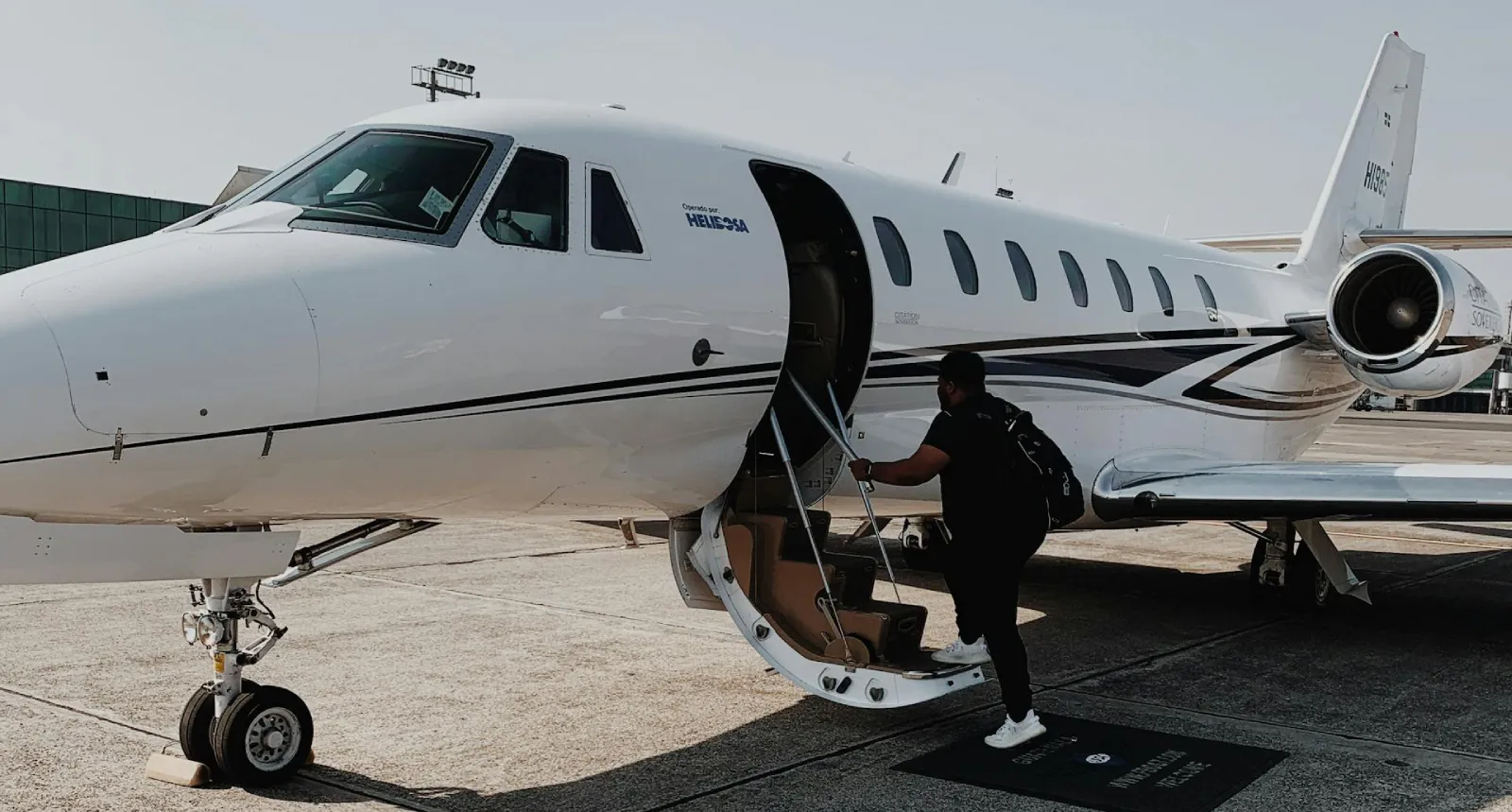
How Aviation is the Smart Business Move
Read Time:4 Minute, 31 Second
In today’s fast-paced global economy, business leaders are constantly on the hunt for competitive advantages that can push their organizations ahead of the pack. One strategic decision that’s gaining serious traction among forward-thinking executives? Leveraging private aviation for business operations. Sure, commercial air travel has been the go-to standard for corporate travel for decades, but the business aviation landscape has evolved dramatically. What was once considered a luxury has become a legitimate business tool that delivers measurable returns on investment. The ability to control schedules, reach remote locations, stay productive in transit, and optimize time management, these aren’t just perks anymore, they’re competitive necessities.
Time Efficiency and Productivity Gains
Let’s talk about time, arguably the most valuable and irreplaceable resource in modern business. Private aviation fundamentally changes how executives use their most precious asset by cutting out the countless inefficiencies that come with commercial air travel. Think about it: business leaders using private aircraft skip lengthy security lines, avoid those soul-crushing layovers, and don’t need to show up hours before departure. This streamlined process can save anywhere from four to six hours per trip compared to commercial alternatives.
Geographic Flexibility and Market Reach
The strategic advantage of reaching locations beyond commercial airlines’ networks? That’s a game, changer in competitive business environments. Private aviation opens doors to thousands of airports worldwide that commercial carriers simply don’t service, which means businesses can establish presence in emerging markets, visit remote operations, and respond rapidly to opportunities in secondary cities. This geographic flexibility proves particularly valuable for companies with operations in rural areas, manufacturing facilities in industrial zones, or clients located away from major metropolitan hubs. When time-sensitive situations arise, whether it’s a critical negotiation, emergency meeting, or facility inspection, private aviation enables same-day round trips to locations that would require overnight stays and multiple connections via commercial routes. This expanded geographic reach directly translates to increased market penetration and stronger client relationships through face-to-face meetings. Companies utilizing business aviation consistently report closing deals faster, resolving operational issues more efficiently, and maintaining stronger connections with stakeholders across their entire business footprint.
Enhanced Security and Confidentiality
In an era where corporate espionage and data breaches pose serious threats to competitive positioning, the security advantages of private aviation provide substantial value that goes beyond conventional measurements. Sensitive business discussions, merger and acquisition negotiations, proprietary product launches, and strategic planning conversations can happen freely in the controlled environment of a private aircraft. There’s no risk of competitors, journalists, or unauthorized parties overhearing confidential information. The security extends beyond conversations, too, executives can transport prototypes, confidential documents, and sensitive equipment without exposing them to the vulnerabilities of commercial baggage handling systems.
Cost, Effectiveness Through Strategic Analysis
While private aviation requires significant financial investment, a comprehensive analysis of total costs versus benefits often reveals some surprising economic advantages for businesses with specific travel patterns and requirements. Organizations need to look beyond simple seat, price comparisons and evaluate the complete picture, including productivity gains, faster deal closures, reduced personnel downtime, and decreased lodging expenses from same-day trip capabilities. When multiple executives travel together to the same destination, the per-person cost differential between private and commercial options narrows considerably while the collective productivity gains multiply. What’s more, the ability to adjust schedules dynamically without incurring change fees, cancellation penalties, or ticket forfeitures provides financial flexibility that commercial travel simply can’t match. For professionals evaluating their private plane needs , calculating the fully-loaded cost of executive time, including compensation, benefits, and opportunity costs of projects delayed when key personnel are unavailable, provides essential insight. This holistic financial analysis frequently demonstrates that the premium paid for private aviation generates positive returns through increased business development, accelerated decision-making cycles, and enhanced executive effectiveness. Smart businesses approach aviation decisions not as expense considerations but as strategic investments in operational capability and competitive positioning.
Employee Satisfaction and Talent Retention
The battle for top executive talent is intensifying across industries, making comprehensive compensation packages that extend beyond salary increasingly important for attracting and retaining high, performing leaders. Access to business aviation serves as a powerful differentiator in recruitment conversations, particularly when competing for executives who value work-life balance and family time. Being able to attend a morning meeting across the country and return home the same evening rather than spending another night away from family? That significantly improves quality of life for traveling executives. This consideration becomes especially compelling for senior leaders whose extensive travel requirements might otherwise force difficult choices between career advancement and personal relationships.
Conclusion
The strategic deployment of business aviation represents far more than an executive perquisite, it’s a legitimate competitive weapon that drives measurable business results across multiple dimensions. From dramatic time savings and expanded geographic reach to enhanced security and improved talent retention, the benefits of aviation ripple throughout organizations that embrace it strategically. While the financial commitment remains substantial, businesses that conduct thorough analyses of their specific travel patterns, productivity requirements, and competitive positioning often discover compelling justifications for aviation programs. As global business complexity continues to increase and competitive pressures intensify across industries, the organizations that leverage every available tool to maximize executive effectiveness will gain sustainable advantages. Private aviation, when deployed strategically and managed efficiently, delivers returns that extend far beyond the flight department budget line to impact overall organizational performance and market competitiveness in measurable, meaningful ways.

Happy
0 %

Sad
0 %

Excited
0 %

Sleepy
0 %

Angry
0 %

Surprise
0 %
 0
0
 0
0