
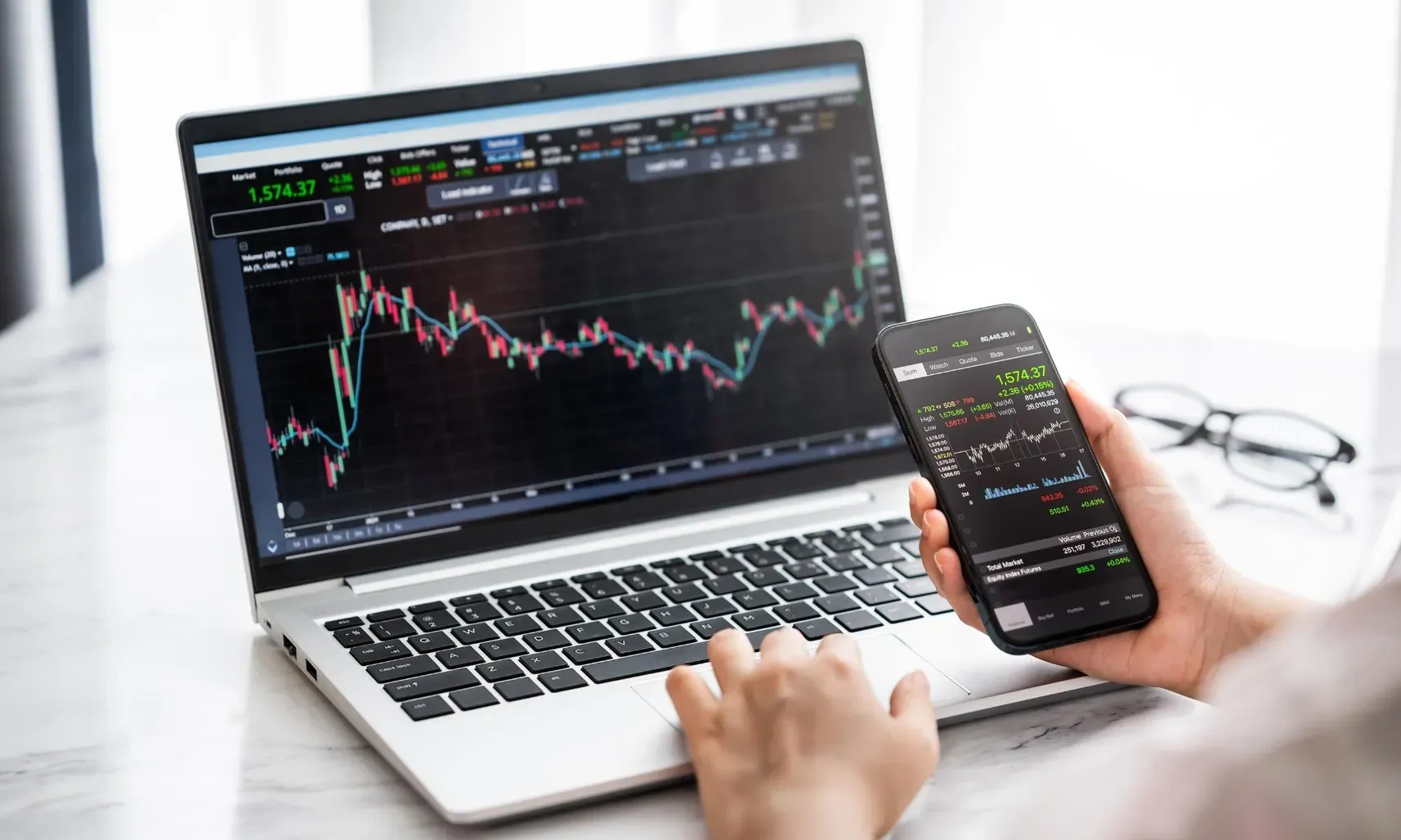
How Beginners Can Choose the Best Online Trading Platform Safely
Read Time:6 Minute, 35 Second
Opening a trading account has never been easier. A new user can often register, verify an email address and access a market dashboard within minutes. However, a fast registration process does not necessarily mean that the platform itself is reliable.
Independent educational resources such as the IamForexTrader list can help beginners compare trading platforms by regulation, fees, account conditions and available instruments. Such comparisons are useful as a starting point, but every important claim should still be verified through the relevant regulator and the platform’s official documents.
Before depositing money, Malaysian users should check whether a company appears in the Securities Commission Malaysia’s licensed intermediary register. It is also worth searching the regulator’s Investor Alert List, which contains websites, products, companies and individuals identified as unauthorised.
These checks take only a few minutes, but they can reveal problems that are not visible on a polished homepage.
“An attractive interface is not proof of a trustworthy platform. Verification should come before registration, not after a withdrawal problem.”
This guide explains how beginners can evaluate an online trading platform without relying on promotional promises, influencer recommendations or unusually high return claims.
Start With Regulation, Not Bonuses
Many beginners compare platforms by looking at deposit bonuses, welcome rewards or advertised returns. Regulation should come first.
A legitimate platform should clearly identify:
- The legal company operating the website;
- Its registered office and contact details;
- The regulator responsible for supervising it;
- Its licence or registration number;
- The countries in which it is authorised to operate.
Do not assume that a company is regulated simply because its website displays a certificate, company number or regulator logo. Company registration and financial regulation are not the same thing.
Take the licence number from the platform’s website and search for it directly in the regulator’s database. The company name, website address and permitted activities should match.
Use a Simple Platform Evaluation Table
The following checklist can help beginners compare online trading platforms more consistently.
| Area to Check | What a Reliable Platform Should Provide | Possible Warning Sign |
|---|---|---|
| Regulation | Verifiable licence and named legal entity | No licence number or unverifiable regulator |
| Fees | Clear spreads, commissions and non-trading charges | Important costs hidden in lengthy terms |
| Withdrawals | Published methods, limits and processing times | Vague rules or repeated withdrawal delays |
| Risk information | Visible and understandable risk warnings | Promises of guaranteed or easy profits |
| Security | Encryption, two-factor authentication and account controls | Weak login protection or unclear privacy policy |
| Support | Several contact methods and useful responses | Only messaging apps or anonymous support |
| Demo account | Practice mode with transparent conditions | Immediate pressure to deposit real money |
A platform does not need to be perfect in every category. However, several warning signs appearing together should be treated seriously.
Read the Full Fee Schedule
Trading costs are not limited to the commission shown on the order screen. Depending on the product and platform, users may also encounter:
- Spreads between buying and selling prices;
- Overnight financing or swap charges;
- Currency conversion fees;
- Deposit and withdrawal charges;
- Account inactivity fees;
- Market data subscriptions;
- Early closure or contract settlement conditions.
A platform may advertise “zero commission” while earning money through wider spreads or other charges. Beginners should therefore calculate the approximate total cost of a transaction rather than focusing on one fee.
The fee schedule should be available before registration. Be cautious when essential information becomes visible only after making a deposit.
Test the Withdrawal Process Early
Depositing money is usually designed to be quick. Withdrawing it can involve identity verification, minimum limits, payment-method restrictions and additional processing.
Before funding an account, find answers to these questions:
- What is the minimum withdrawal amount?
- Which documents are required?
- Must funds be returned through the original payment method?
- How long does internal processing take?
- Are there withdrawal or conversion fees?
- Can bonus conditions restrict access to deposited funds?
- Is there a clear complaint procedure?
Beginners who decide to use a platform should avoid starting with a large deposit. A small initial transaction and withdrawal request can reveal how the payment process works in practice.
However, a successful small withdrawal is not absolute proof that every future request will be processed without problems.
Check Whether the Product Is Understandable
A good platform should explain how its products work, how prices are formed and how much money the user can lose.
Be particularly careful with products involving:
- High leverage;
- Very short contract durations;
- Fixed-return outcomes;
- Complex derivatives;
- Automatic trading systems;
- Copy-trading profiles with limited history.
Do not trade a product simply because the interface makes it look easy. A simple “up” or “down” button can still represent a complicated and highly speculative contract.
Before placing real orders, a beginner should understand the opening price, closing conditions, maximum loss, possible fees and circumstances under which the position may be closed automatically.
Do Not Confuse a Demo Account With Real Trading
A demo account is useful for learning platform navigation, testing order types and becoming familiar with charts. Nevertheless, practice trading cannot fully reproduce the emotional and financial pressure of using real money.
Demo results may also differ from live results because of:
- Different order execution;
- Limited slippage simulation;
- Faster trade confirmation;
- Different liquidity conditions;
- The absence of real financial consequences.
Use a demo account to understand the software, not to prove that a trading strategy will remain profitable.
Examine Security and Privacy
An online trading account may contain identity documents, payment information and financial records. Security should therefore be considered before uploading personal data.
Look for:
- Two-factor authentication;
- Login and withdrawal notifications;
- Device and session management;
- A clear privacy policy;
- Secure document-upload procedures;
- Controls for changing payment information;
- A process for reporting unauthorised account access.
Users should create a unique password and avoid logging in through links received in unsolicited emails or messages. Fake websites may closely copy the design and branding of legitimate companies.
Test Customer Support Before Depositing
Contact support with a specific question about fees, regulation or withdrawals. The quality of the answer can be more informative than the speed of the reply.
Reliable support should be able to provide a direct and consistent explanation or point to the relevant policy. Generic sales messages, pressure to deposit or attempts to avoid written answers are warning signs.
Keep copies of important conversations, transaction confirmations and account statements. These records may be useful if a dispute occurs.
Watch for High-Pressure Marketing
Marketing becomes concerning when a platform or representative:
- Promises guaranteed returns;
- Claims that losses are almost impossible;
- Pressures the user to deposit immediately;
- Recommends borrowing money to trade;
- Requests remote access to a computer or phone;
- Asks for payments to a personal bank account;
- Demands an additional “tax” before releasing a withdrawal.
Legitimate financial companies should not need secrecy, urgency or unrealistic profit claims to attract customers.
A Better Decision Process for Beginners
Instead of asking only which platform has the most attractive interface, beginners should follow a structured process:
- Identify the legal operator.
- Verify its regulatory status independently.
- Review the complete fee schedule.
- Read withdrawal and verification rules.
- Test the demo platform.
- Contact support with specific questions.
- Start with an amount that can be lost without affecting essential expenses.
- Keep records of all payments and communications.
Online trading always involves uncertainty. The purpose of due diligence is not to remove market risk, which is impossible, but to avoid adding unnecessary platform, legal and payment risks.
Final Thoughts
The best online trading platform for beginners is not necessarily the one with the largest bonus, the shortest registration form or the most exciting advertising. It is the platform whose legal status, costs, risks and withdrawal procedures can be independently checked and clearly understood.
Take time to compare several providers, verify all regulatory claims and avoid making decisions under pressure. Missing a supposed “limited-time opportunity” is far less costly than depositing money with a platform you have not properly investigated.
This article is provided for general educational purposes and does not constitute investment advice. Trading and investing can result in financial losses.

Happy
0 %

Sad
0 %

Excited
0 %

Sleepy
0 %

Angry
0 %

Surprise
0 %
 0
0
 0
0