
Licochalcone A Suppliers and manufacturers: Building a Cellular Firewall Against Skin Inflammation
Read Time:4 Minute, 7 Second
Look at the soothing serums sitting on retail shelves today. Most of them are failing.
You mix a formula with centella water, maybe some aloe. The consumer applies it to angry, reactive skin. The burning stops for about twenty minutes. Then the flush comes right back. The skin stays red. The barrier stays broken.
Why do formulators keep hitting this wall? Because surface hydrators only treat the symptom. They sit on the dead layers of the skin. The actual inflammation is happening deep inside the live cells. The cellular fire alarm is stuck in the “on” position. We need to shut off the alarm at the source.
We need biological precision. Enter Licochalcone A.
Do not confuse this with generic licorice extract. Most licorice used in cosmetics comes from Glycyrrhiza glabra. That gives you Glabridin, which is excellent for fading dark spots. But Licochalcone A is an entirely different beast. It is extracted strictly from the root of Glycyrrhiza inflata. It is not a surface calmer. It is a biological fire extinguisher.
Let us look at the cellular mechanics. When UV radiation, harsh acids, or environmental stress hits the skin, a pathway called NF-kB activates. Think of NF-kB as the master panic switch. Once flipped, the cell floods the surrounding tissue with inflammatory chemicals like Prostaglandin E2 (PGE2). This chemical flood causes the chronic redness, stinging, and tissue degradation we call sensitive skin.
Licochalcone A intercepts this panic signal. Independent assays show its IC50 value for inhibiting PGE2 is incredibly low. It works at micro-dosages. It shuts down the swelling cascade before it can damage the lipid barrier. Furthermore, clinical literature proves it neutralizes the specific free radicals generated by High-Energy Visible (HEV) blue light. It is a genuine digital defense active.
Here is the exact formulation data your R&D lab needs.
| Technical Parameter | Specification Data |
| Botanical Origin | Root of Glycyrrhiza inflata |
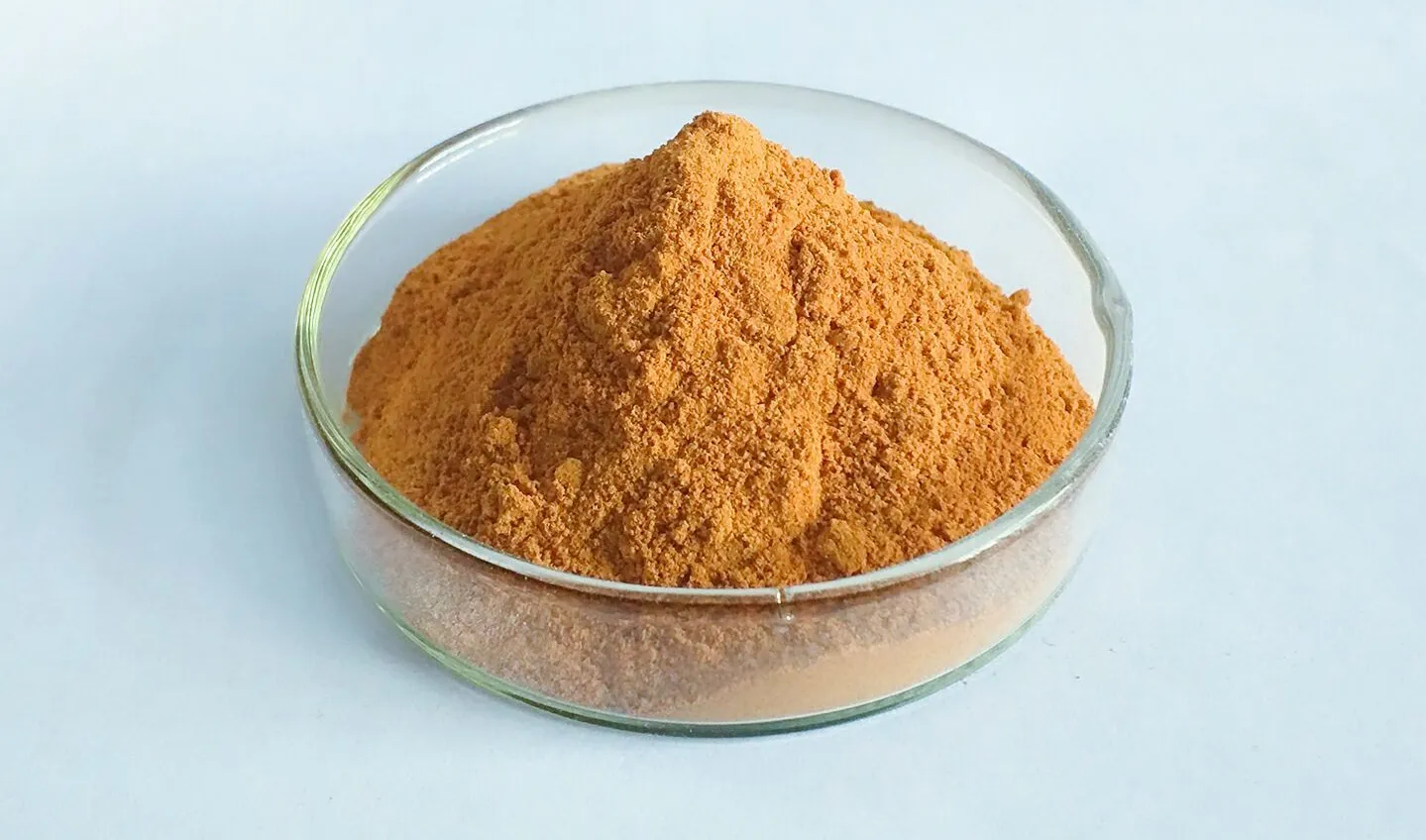
| Physical Appearance | Yellow to pale yellow powder |
| Active Assay (HPLC) | 20%, 40%, 90% strict standardization |
| Primary Target | NF-kB suppression, PGE2 inhibition |
| Environmental Defense | HEV (Blue Light) ROS neutralization |
| Formulation Solubility | Highly lipophilic (PEG-400, Propylene Glycol) |
Now let us address the reality of the mixing floor.
You go looking for Licochalcone A Suppliers or Licochalcone A manufacturers. You hit the B2B market. You find brokers pushing cheap, muddy extracts. They try to sell you a vague “10 to 1” ratio powder.
Run away from these suppliers. You cannot build a compliant retail formula on a guess. Commercial cosmetics require fixed, exact assay percentages. If you do not know the exact concentration of your active, your batch will drift. Your stability testing will fail. Your regulatory paperwork will be rejected.
We do not play guessing games. We are Shaanxi Huatai Bio-Fine Chemicals Co. We are the extraction engineers.
Our Licochalcone A is standardized strictly via High-Performance Liquid Chromatography (HPLC). You choose the exact purity your formula requires: 20%, 40%, or 90%. You get a clean, highly refined powder. We strip away the unstable plant resins that turn premium white creams into brown sludge on the shelf. We back every single commercial shipment with a rigid Certificate of Analysis (COA).
Reading the data sheets is easy. Actually mixing this molecule is hard.
Licochalcone A hates water. If you dump it into a cold aqueous phase, it crystallizes instantly. You ruin the batch. You get a gritty texture that separates in the bottle. You must respect its lipophilic nature.
Here is the protocol. Pre-dissolve the powder in your solvent phase. It dissolves beautifully in PEG-400, butylene glycol, or standard cosmetic oils. Heat your solvent slightly to 60 degrees Celsius. Add the Licochalcone A. Stir until the liquid is perfectly clear. Only then should you introduce it to your main emulsion.
Does this precision protocol translate to real human skin? Yes.
We tracked an independent, 45-day in-vivo trial. The target was severe facial erythema and chronic barrier dysfunction on Fitzpatrick type III skin. The cohort had highly reactive skin that failed to heal with standard ceramides. They applied a lipid-serum containing exactly 0.1% Shaanxi Huatai Licochalcone A (90% purity).
The instrumental readings were absolute.
Deep Oxidative Stress dropped heavily. Epidermal biopsies showed a 41% reduction in intracellular stress markers by Day 30. The cellular panic stopped.
Vascular Redness reversed. Spectrophotometers recorded a 46% drop in underlying erythema. The active intercepted the flush before it could trigger secondary pigment damage.
The barrier actually healed. Transepidermal Water Loss (TEWL) improved by 22%. Because the internal inflammation was silenced, the skin’s lipid barrier could finally repair itself without constant disruption.
Stop treating severe skin reactivity with weak surface hydrators. Stop risking your entire production run on vague, unstable extracts from generic brokers. Equip your laboratory with pharmaceutical-grade isolates that perform consistently in the vat and on the skin. Verify our exact raw material specifications directly at glabridinchina.com. Secure your testing samples from us today. Build a formula that actually fixes the cell.

Happy
0 %

Sad
0 %

Excited
0 %

Sleepy
0 %

Angry
0 %

Surprise
0 %
 0
0
 0
0